Top things to do in Warsaw
Start in the Old Town (Stare Miasto), rebuilt so faithfully after 1945 that UNESCO listed the reconstruction itself as a World Heritage Site — walk the pastel townhouses of the Market Square, climb into the Royal Castle, and pass under the medieval Barbican gate before following the Royal Route south.
That route leads to Łazienki Park, the largest green space in the city and home to a Chopin monument, a lakeside Palace on the Isle, and free open-air piano recitals in summer. Families and curious minds should also budget half a day for the Copernicus Science Centre, one of Europe's best hands-on museums, and anyone drawn to the darker chapters should cross to the site of the former ghetto near the POLIN Museum.
Neighborhoods and where to eat
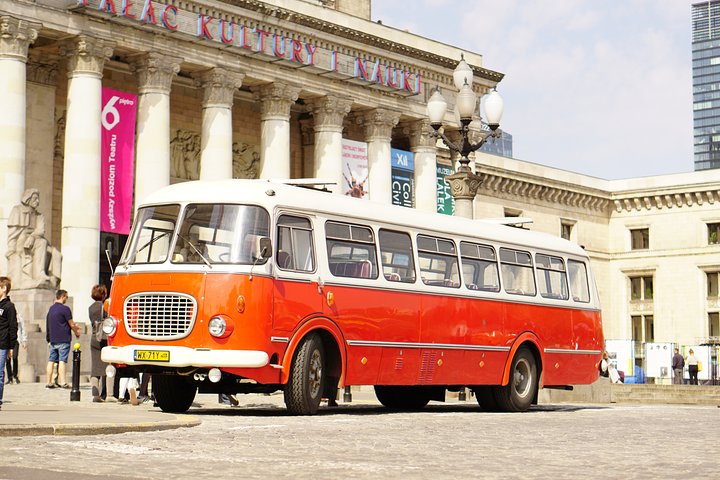
Praga, on the right bank of the Vistula (Wisła), is Warsaw's rawest, most atmospheric district — spared the wartime destruction that leveled the rest of the city, its prewar tenements now host street art, indie galleries and some of the best nightlife in town. Back across the river, the Old Town and New Town are for postcard views and history, while Śródmieście (city center) mixes glass towers with the Palace of Culture and Science looming over it all.
Eat your way through pierogi — dumplings stuffed with everything from potato and cheese to wild mushrooms or sweet fruit — and try żurek, a sour rye soup, or a milk bar (bar mleczny), the canteen-style diners left over from the communist era that still serve hearty Polish classics for a few złoty. Wash it down with a shot of Żubrówka, bison-grass vodka, the way locals do.
Getting around and best time to visit
Central Warsaw is flat and walkable, and a single ticket covers the metro, trams and buses across the whole city — buy one from a machine or an app before boarding, since inspections are common. Trams are the fastest way to reach Praga or the further stretches of the Royal Route, and the airport connects to downtown by a direct train.
The sweet spots are late spring (May–June) and early autumn (September), with mild weather and Łazienki Park at its greenest. Summer brings warm days and long evenings for outdoor concerts, while winters turn properly cold and sometimes snowy — atmospheric for the Christmas markets, but pack accordingly. Free walking tours run year-round, whatever the forecast.